Orthopedic Implants Manufacturer

2026 Best Nasal Opening Strips for Global Buyers

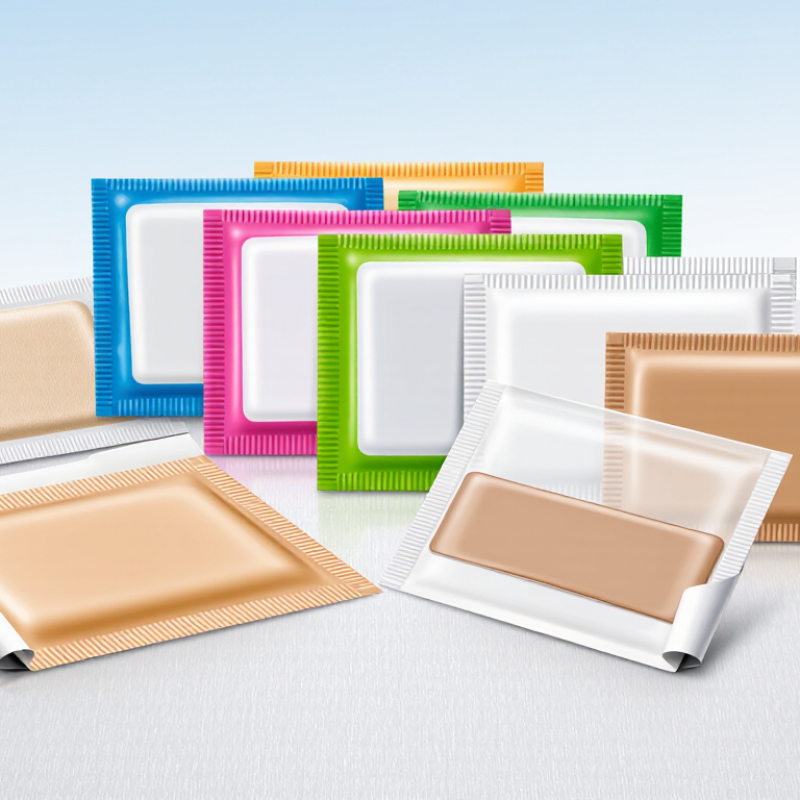
Global buyers are looking for simple, non-drug options that may make nasal breathing feel easier. Nasal Opening Strips work by gently lifting the sides of the nose; they do not treat every cause of congestion or noisy breathing. Product choice can feel deceptively simple. Strip width, adhesive feel, and spring tension all matter when one is worn across the nose for several hours.

The Global Wellness Institute’s 2024 Global Wellness Economy Monitor estimated the wider wellness economy at $6.3 trillion in 2023. It projected continued growth through 2028. This is not a nasal-strip sales figure, but it helps explain rising interest in everyday wellness products. Clinical evidence also deserves careful reading: Peppard and colleagues estimated that 26% of U.S. adults aged 30–70 had at least mild obstructive sleep apnea in a 2013 American Journal of Epidemiology study. That finding concerns sleep apnea, not a condition nasal strips can treat. The distinction matters.

This 2026 guide compares options for international buyers using practical criteria: comfort on different skin types, fit across nose shapes, adhesive performance, packaging, and clear instructions. Check the product’s stated use and replacement guidance. A strip that loosens in humid weather or pulls sensitive skin may not suit a particular user. Small details count. Evidence and product claims can also vary, and some comparisons remain imperfect. Buyers should weigh verified specifications alongside personal comfort, rather than treating any strip as a guaranteed solution.
2026 Best Nasal Opening Strips for Global Buyers

Nasal Strip Types and Mechanics: Spring Force, Fit, and Nasal-Valve Support

Nasal strips differ in how their spring force lifts the sides of the nose. A firmer strip may pull outward more strongly, but stronger is not automatically better. Excess pressure can feel uncomfortable or loosen during sleep. The useful question is whether the strip gently supports the nasal sidewalls without irritating the skin. It works externally and does not open the airway for everyone.

Fit matters as much as spring force. Place the strip across clean, dry skin, just above the nostril flare. If it wrinkles, lifts at the edges, or tugs sharply, its shape may not suit your nose. Nasal-valve support is a practical goal: the strip may help resist inward collapse around the narrow nasal passage during breathing. Results vary, and a strip cannot diagnose or treat the cause of persistent congestion. Fit is harder to judge from packaging than spring strength.

Tips: Check size guidance and skin-material details before buying, especially when shopping across regions. Try one strip while awake first. Stop if you notice irritation, pain, or worsening symptoms.

2026 Best Nasal Opening Strips for Global Buyers

Nasal strip types and mechanics: spring force, fit, and nasal-valve support

A value of 1 indicates a typical design feature; 0 means it is not typically part of that design. External strips use elastic restoring force to pull the nasal sidewalls outward and need skin adhesion. Internal dilators sit inside the nostrils and rely on intranasal fit to provide outward support. Designs vary, and this chart describes mechanics—not clinical effectiveness.

Clinical Performance Measures: Nasal Resistance, Peak Flow, and Sleep Outcomes

2026 Best Nasal Opening Strips for Global Buyers

Clinical performance is more useful than a dramatic package claim. Nasal resistance measures how difficult it is for air to pass through the nose. A lower reading may suggest easier nasal breathing, but results depend on testing conditions and individual anatomy. Peak nasal inspiratory flow offers another practical measure: users inhale sharply through a handheld meter, ideally at the same time of day and under similar conditions. One reading proves little. Repeated measurements are more informative.

Sleep outcomes need careful interpretation. A strip may reduce nasal stuffiness or mouth breathing for some people, yet it cannot diagnose or treat obstructive sleep apnea. Studies may assess snoring reports, sleep quality questionnaires, or overnight measurements; these outcomes are not interchangeable. Comfort also matters. If adhesive edges lift during a warm night, performance may be inconsistent. Evidence can be imperfect, and results from small studies may not apply to every face or climate.

Tips: Compare baseline and follow-up peak-flow readings across several nights, and note congestion, sleep position, and comfort. Choose a size that sits securely without pulling painfully. Stop if the skin becomes irritated. Persistent breathing difficulty or loud snoring deserves clinical advice, not just another product trial.

Skin-Safety Review: ISO 10993 Biological-Evaluation Principles

For 2026 buyers comparing nasal opening strips, skin safety starts with the adhesive, not the package claims. The strip rests on facial skin, often for several hours, and may be used repeatedly. ISO 10993-1:2018 classifies contact as limited (up to 24 hours), prolonged (more than 24 hours to 30 days), or long-term (over 30 days). These categories help frame evaluation; they do not certify a product or replace assessment of its actual materials and use.

That distinction matters.

Ask suppliers for biological-evaluation evidence on the finished strip, including the adhesive and any coatings—not just raw-material documents. ISO 10993-23:2021 addresses irritation testing, while ISO 10993-10:2021 covers sensitization. Buyers should also review test conditions, contact duration, and whether results reflect repeated overnight wear. A lab report is only useful when its sample matches the product being sold.

That is not proof.

Check practical details too: clean removal, residue, and whether strip edges lift on damp or oily skin. Skin is individual. A careful review should leave room for uncertainty, because one test cannot predict every user’s reaction.

Global Compliance Checks: FDA Clearance and EU MDR 2017/745

2026 Best Nasal Opening Strips for Global Buyers

For global buyers, regulatory documents matter as much as strip adhesion and comfort. In the United States, check the product’s intended use and FDA classification before requesting evidence of clearance. Some external nasal dilators may not require premarket notification, but requirements depend on their design and claims. FDA establishment registration or device listing is not the same as FDA clearance or approval. Ask suppliers for the applicable regulatory basis, labeling, and supporting records. Clear answers matter.

In the European Union, Regulation (EU) 2017/745 (MDR) governs medical devices. Classification depends on intended purpose and risk, so do not assume every nasal strip follows the same route. Where applicable, review the CE marking, EU Declaration of Conformity, technical documentation, and required importer information. Check that the product’s claims match its evidence and labeling. A neat certificate alone may not tell the whole story; document checks can still feel messy.

Tips: Request current documents for the exact model, not a similar product. Compare intended-use wording across packaging, instructions, and sales materials. Confirm applicable national language and traceability requirements with a qualified regulatory professional. Keep dated records of your review. Small details count.

2026 Best Nasal Opening Strips for Global Buyers – Global Compliance Checks: FDA Clearance and EU MDR 2017/745
Evaluation dimension Buyer check Evidence or acceptance criteria Compliance note
Intended use and claims Check whether the product is marketed as a general nasal-opening aid or with medical claims, such as relief of nasal congestion. Product label, instructions for use, website claims, and promotional materials should describe the same intended purpose. Regulatory status depends on intended purpose and market. Do not assume that one classification applies to every nasal strip.
FDA status Ask the supplier to identify the applicable U.S. regulatory pathway and provide product-specific supporting records. Check relevant FDA database records where applicable. Confirm that the manufacturer, device description, and marketed product match the supplied documentation. Verify product-specific status
FDA establishment registration or device listing does not, by itself, mean FDA approval or clearance. Do not advertise a strip as “FDA cleared” without evidence of the applicable clearance.
EU MDR 2017/745 classification Request the manufacturer’s documented classification rationale based on intended purpose and applicable MDR rules. For a non-invasive medical device, Rule 1 may be relevant; the final classification must be confirmed against the device’s intended purpose and design. Some Class I devices may be self-declared by the manufacturer. Class I sterile, measuring, or reusable surgical-instrument cases have additional notified-body involvement. Confirm the actual route rather than assuming it.
EU Declaration of Conformity and CE marking For products placed on the EU market as medical devices, check the EU Declaration of Conformity and the basis for CE marking. Verify that the declaration identifies the manufacturer, device or product family, applicable legislation, and relevant classification. CE marking is not a generic quality certificate. Check that the documentation matches the product and its intended purpose under MDR 2017/745.
Skin-contact materials and adhesive Review the backing, adhesive, and any materials that contact the skin; ask about known allergens and removal instructions. Request material specifications, supplier declarations, and risk-management or biocompatibility rationale appropriate to the contact type and duration. Evidence should be relevant to the finished product and its intended contact. Avoid treating a raw-material certificate as proof of finished-device compliance.
Size and fit Compare strip dimensions, shape, flexibility, and fit guidance with the intended user population. Request a size chart, clear application instructions, and samples for fit and adhesion evaluation across representative users. There is no single universal strip size or fit standard for all users. Claims about size suitability should be supported by product-specific information.
Adhesion and removal performance Evaluate secure wear during the stated use period and comfortable removal from clean, dry skin. Ask for test methods and results covering adhesion, wear conditions, removal, and any defined performance limits. Use performance data that reflects the final strip and its instructions. Avoid unsupported “all-night” or similar duration claims.
Safety information and labeling Check directions, warnings, contraindications, storage conditions, and the intended user group. Labeling should explain correct placement and removal and include relevant cautions, such as not applying to irritated or damaged skin where applicable. Requirements vary by destination market and product status. Provide required local-language information where applicable.
Traceability and quality controls Review lot or batch identification, complaint handling, change control, and recall procedures. Request a sample label and documentation showing how supplied lots can be traced to production and release records. Confirm the controls required for the product’s regulatory status and each target market; do not rely on a certificate without checking its scope and validity.
Packaging and shelf life Check pouch or pack integrity, storage conditions, and any stated expiry or shelf-life period. Request packaging specifications and supporting shelf-life or stability evidence for the marketed configuration. Expiry dates and storage claims should be supported by product-specific evidence and consistent with the label.
Import and market access Confirm importer, responsible-person, registration, language, and customs requirements for each destination country. Use a market-by-market checklist and verify requirements with the relevant authority or a qualified local regulatory professional. FDA and EU MDR requirements do not automatically satisfy every country’s rules. Import obligations can differ by market and product claims.

2026 Buyer Scorecard: Adhesion, Lift Force, Pack Size, and Cost per Strip

A useful 2026 buyer scorecard compares adhesion, lift force, pack size, and cost per strip under consistent conditions. Adhesion should hold through ordinary movement without leaving excessive residue. Check whether instructions specify clean, dry skin; creams and moisture can affect grip. A strip that loosens at the edges may be less useful, even if its listed lift force looks impressive. Comfort matters too. Stronger pull is not automatically better for every user.

Lift force figures can be difficult to compare when sellers use different testing methods. Ask for test details rather than treating one number as decisive. Pack size changes the real value: divide the price by the number of usable strips, not simply the number printed on the box. Then consider whether the pack suits a short trial or regular use. Small packs reduce waste if the fit disappoints. That matters. Cost per strip is only a starting point, since a low price cannot compensate for poor adhesion or uncomfortable removal. This scorecard has limits; skin, nose shape, and personal comfort vary, so product claims should be checked against clear instructions and a cautious trial.